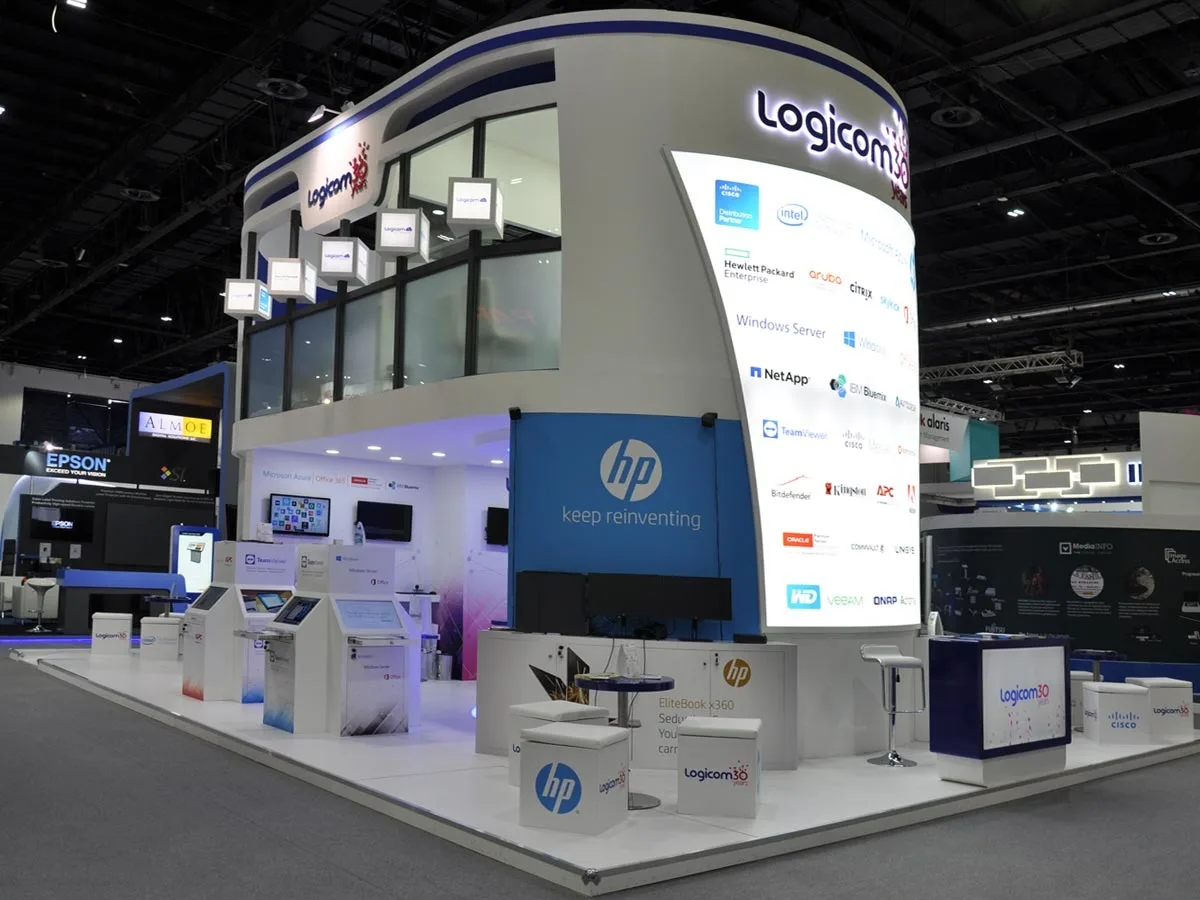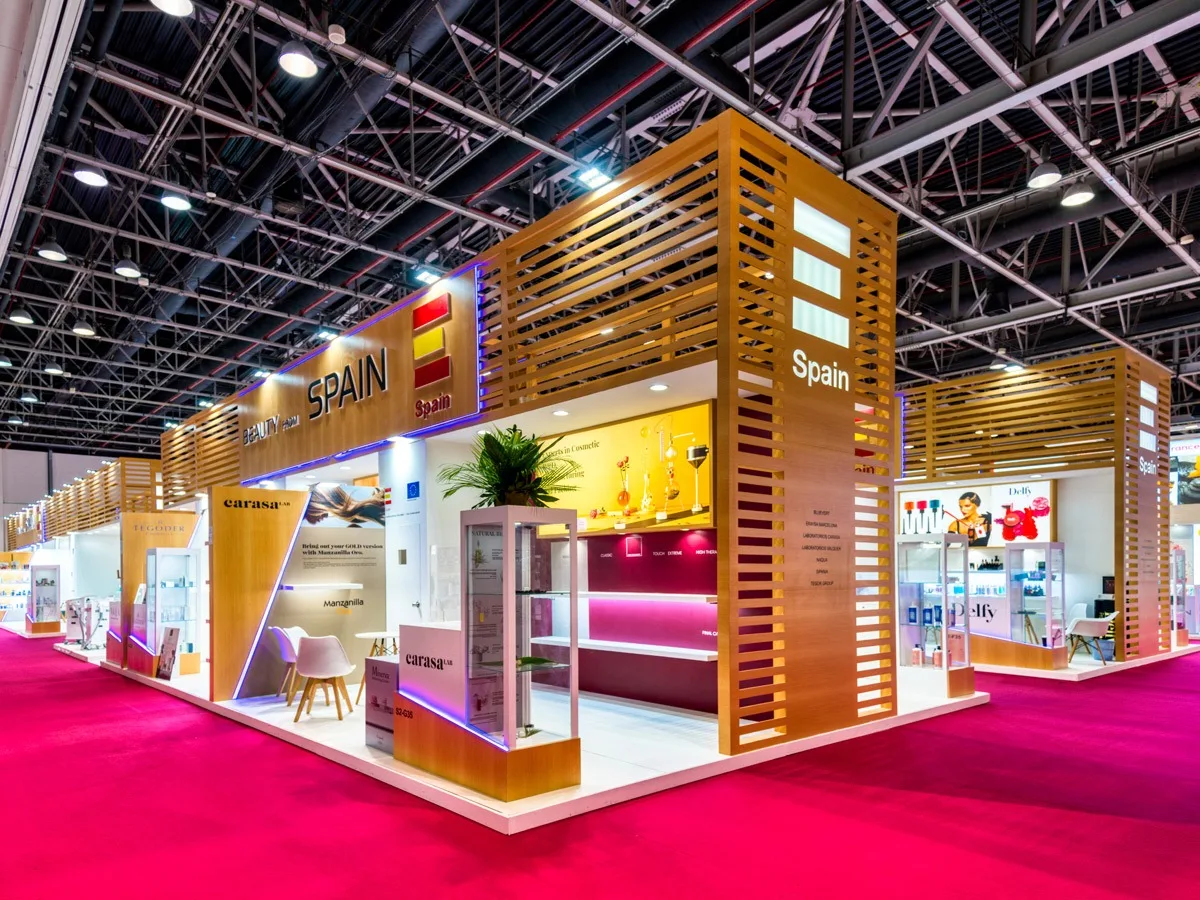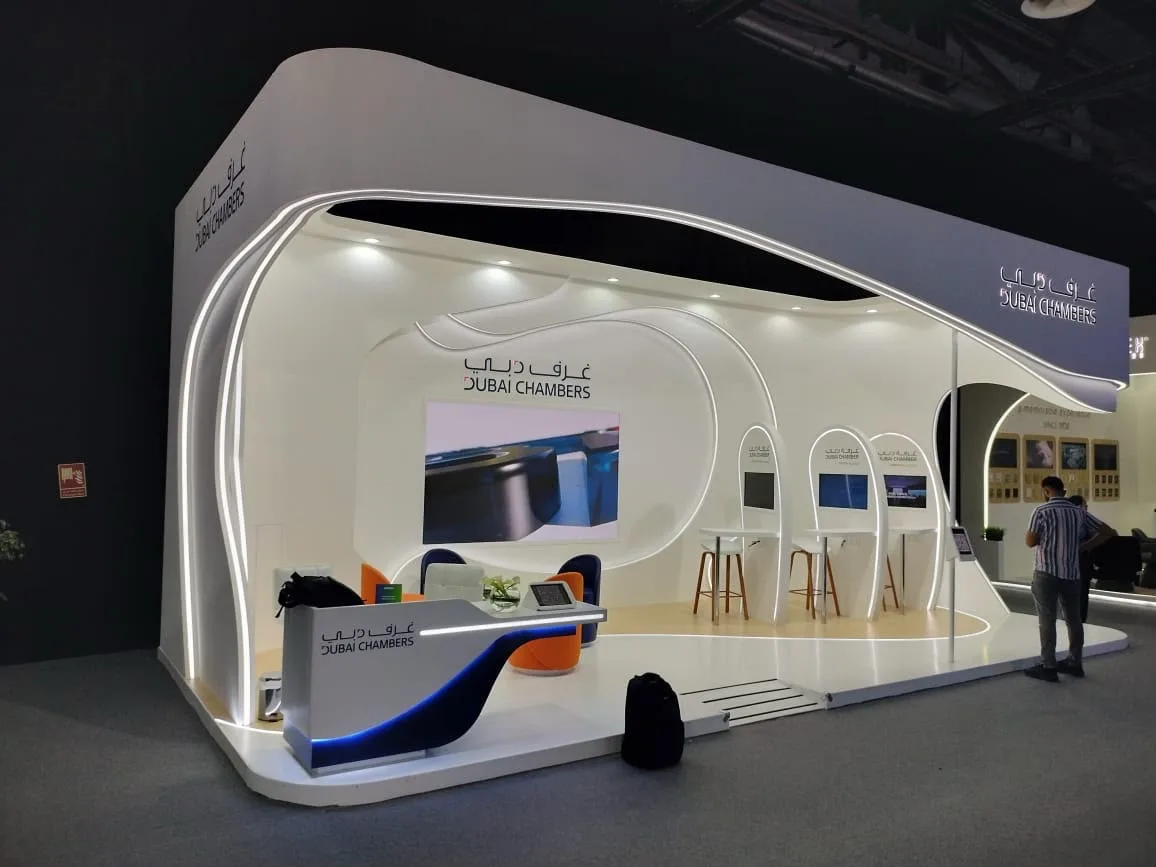
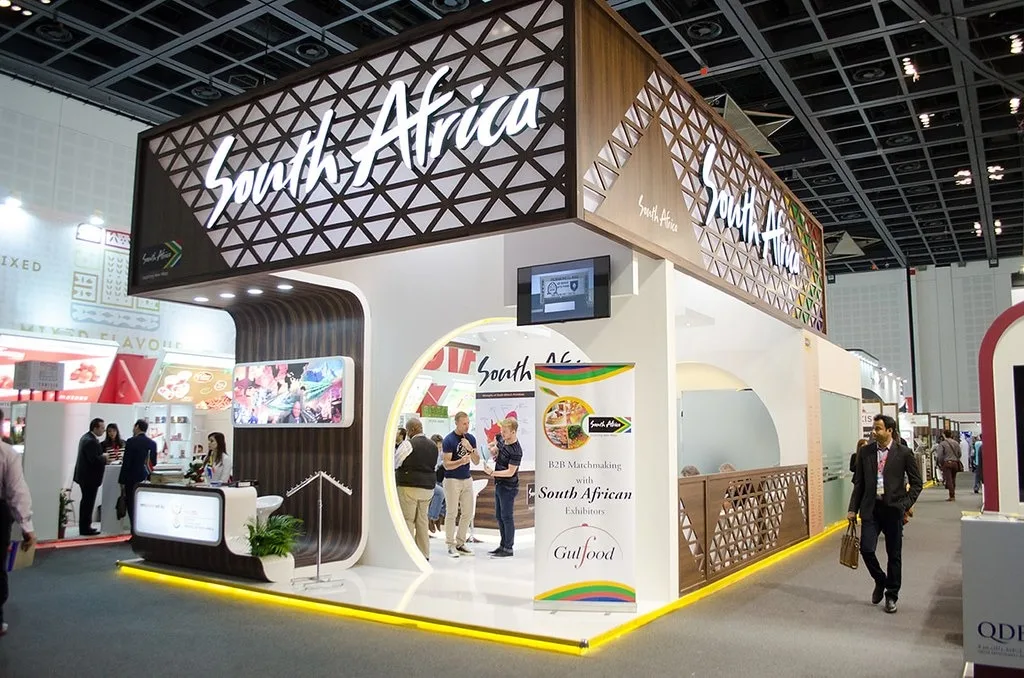
Exhibitions have an honest sustainability problem: most of what gets built for a four-day show is designed to be thrown away on the fifth. Trussing gets cut down. Printed graphics go to landfill because they're branded for one client and one date. MDF gets skipped for the next job because it's already scuffed. The industry talks about sustainability constantly and rarely shows the number that actually matters — how much of a stand survives past the show it was built for.
We don't think we've solved this. Nobody in this industry fully has. But after two decades of running our own 15,000 m² production facility, we've learned where the real leverage is, and it isn't in the places most marketing copy points to.
Where the waste actually comes from
It's rarely the timber. A well-built substructure — the frame, the joinery, the load-bearing elements — can outlast a dozen shows if it's designed to be reconfigured rather than rebuilt from scratch each time. The waste comes from three places: single-use graphics printed directly onto a surface instead of a removable panel, adhesive-fixed finishes that can't be stripped without destroying what's underneath, and custom elements sized so specifically to one brand that they can't be repurposed for anyone else.
What actually moves the number
- Modular sub-structure. Frames and rigging built to a shared dimensional system get reused across unrelated clients — a truss run built for a fintech stand in February can carry a pharma stand in June.
- Graphics on removable substrates. Print goes onto panels that unclip, not surfaces that get repainted or replaced. The panel comes back to the workshop; only the print layer is retired.
- Real timber over composite where it's structural. Solid and engineered timber can be re-milled and reused; many composite boards can't be meaningfully recycled once cut and fixed.
- In-house production. When fabrication, print and install sit under one roof, offcuts from one job become stock for the next, instead of being scattered across three subcontractors with no reason to coordinate.
The most sustainable stand isn't the one with a bamboo veneer on the brochure. It's the one whose frame is still in service two years later.
The honest trade-offs
Reused structure has a visible cost: it constrains geometry. A frame system designed for reuse across clients can't chase every custom curve a designer might want on a render. We've had briefs where the client wanted a specific sculptural form that genuinely couldn't be built from anything but a bespoke, single-use structure — and we said so, plainly, rather than dressing up a compromise as an eco-friendly one.
Sustainability claims that don't acknowledge that trade-off are the ones worth being skeptical of. A stand builder who tells you everything can be green with no design compromise usually isn't measuring anything.
What to ask a stand builder
If sustainability matters to your brand, three questions tend to separate substance from a slide in a pitch deck: What percentage of your structural stock gets reused across clients, not just recycled at end of life? Where is your fabrication actually done, and how many hands does material pass through before install? And can you show — not describe — a stand you built that's now on its second or third show?
Those answers are harder to give than a sustainability statement. They're also the only ones that mean anything.