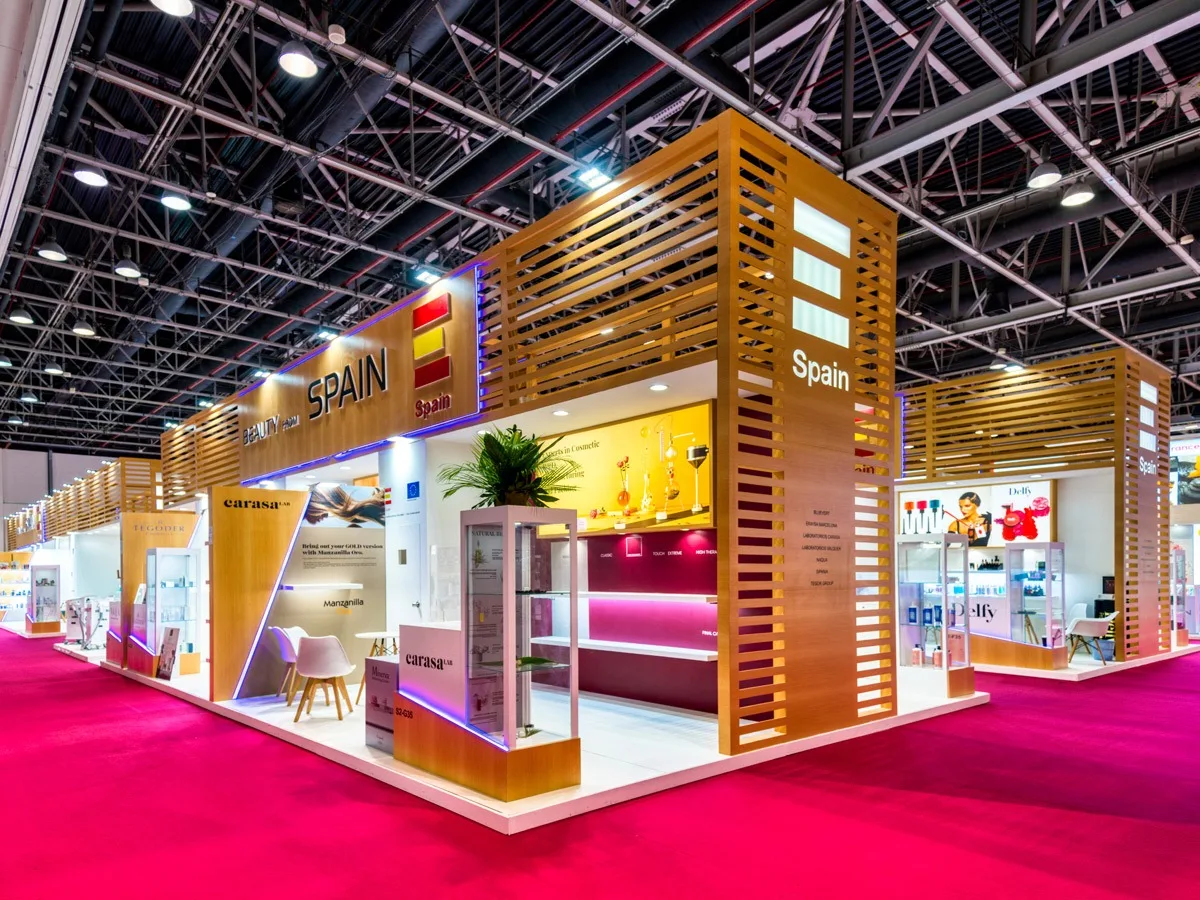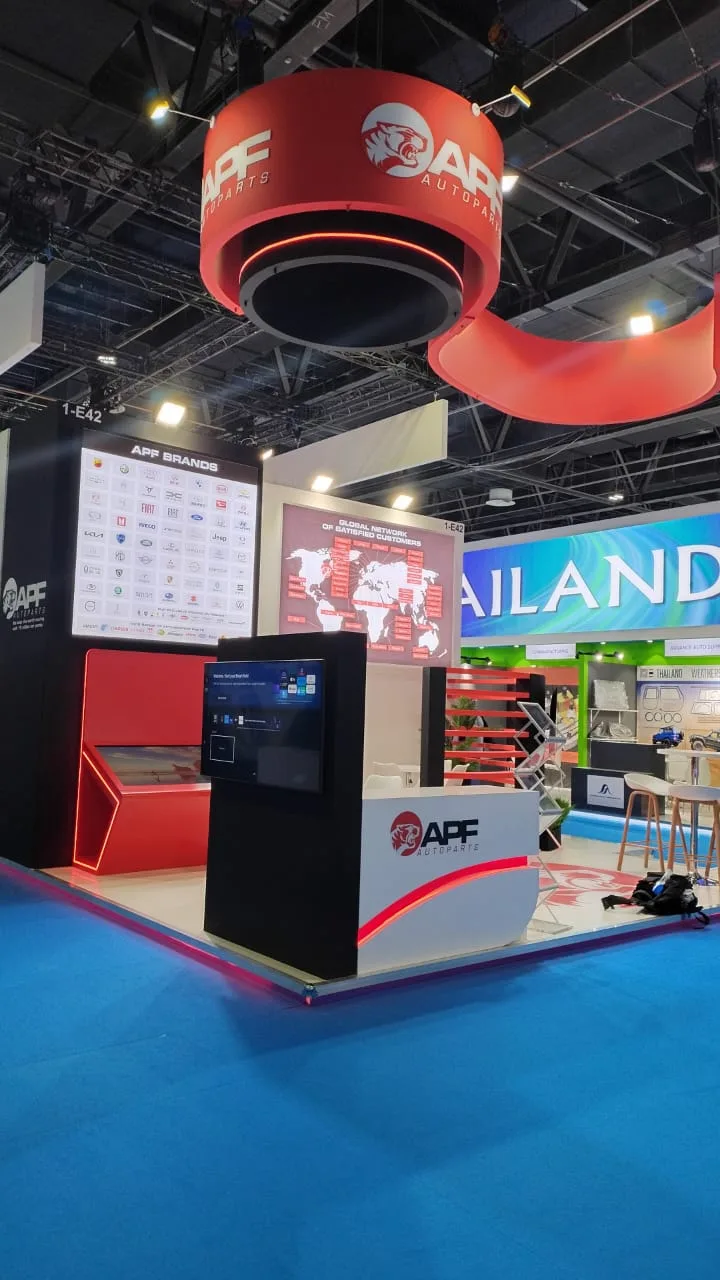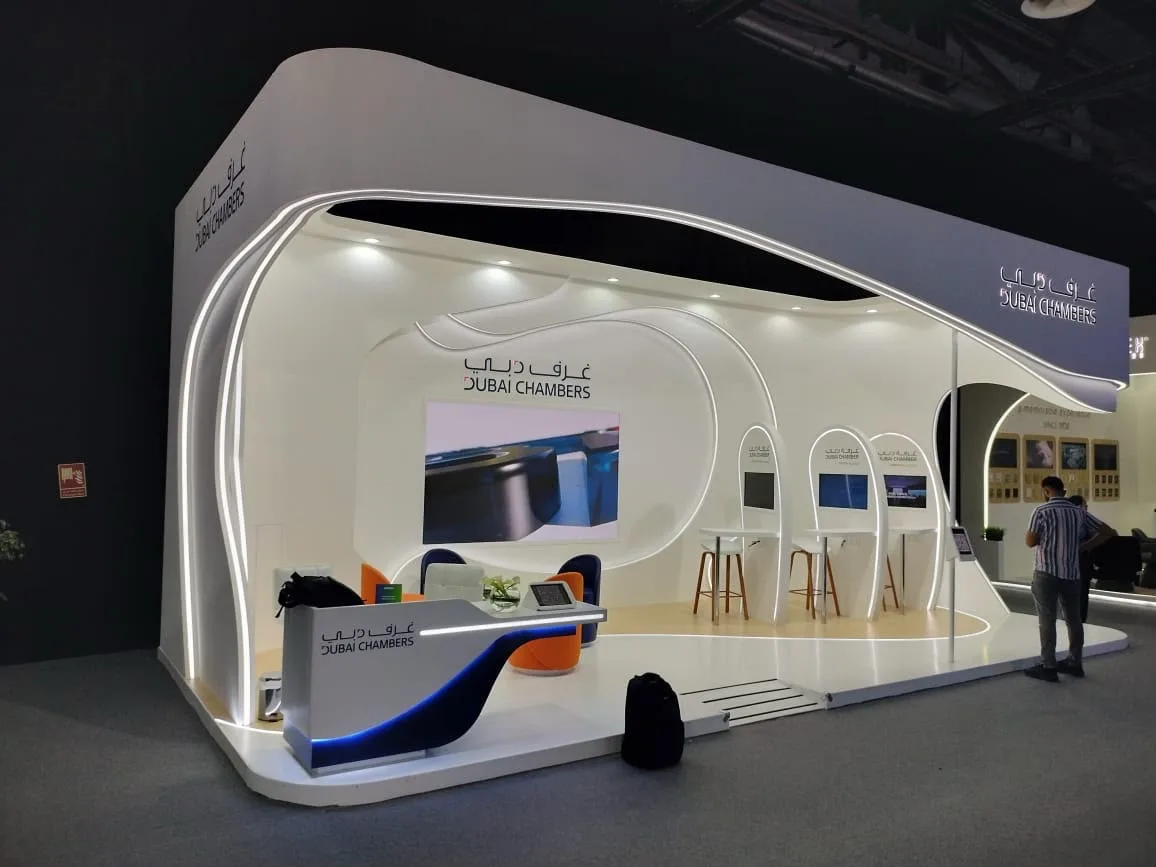
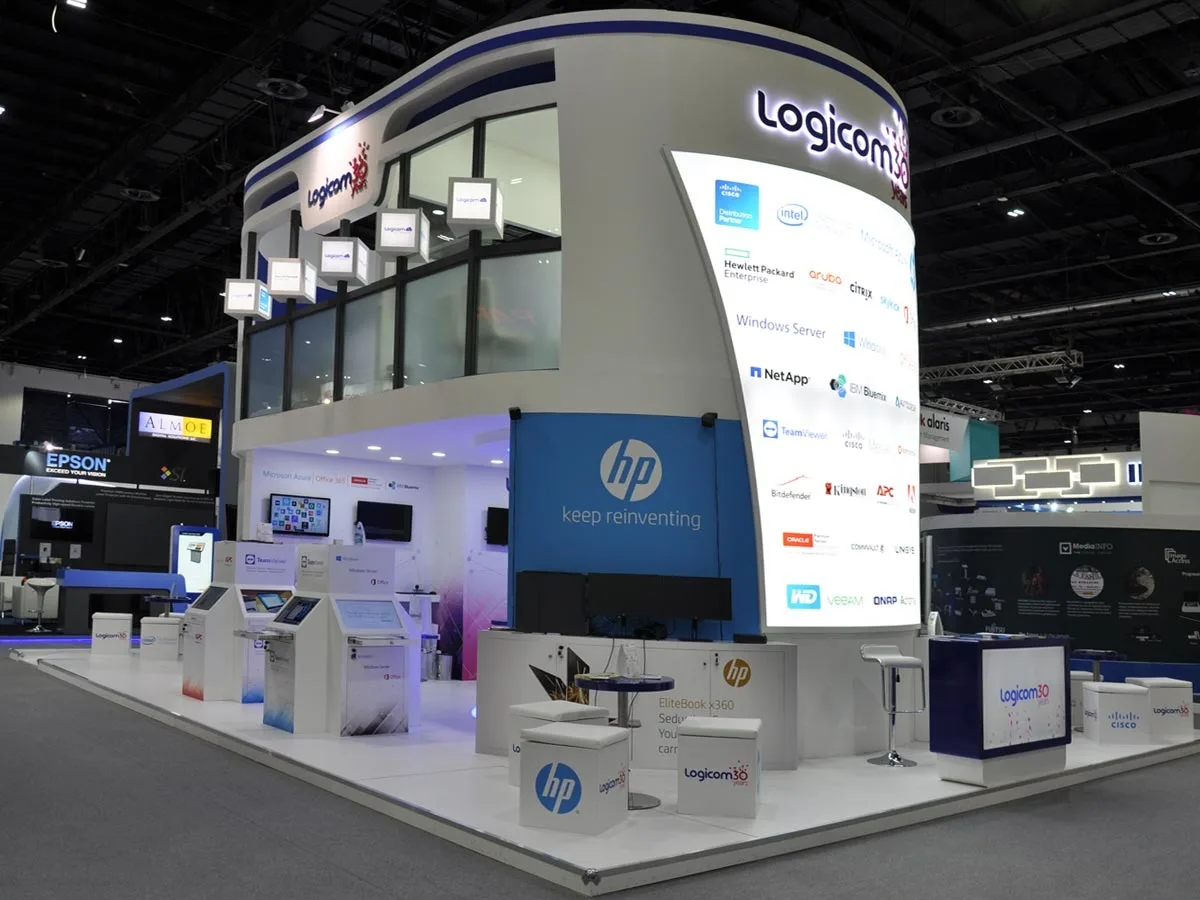
Every exhibition brief we get talks about the opening. The client wants to know how the stand will look when the hall doors swing open on day one — the lighting, the reveal, the first photo. That's natural. It's also the wrong end of the project to design from.
The stand doesn't just have to look right for three or four days. It has to come apart. Fast, cleanly, on a schedule set by the venue and not by you, usually overnight, usually alongside forty other contractors doing the exact same thing in the exact same hall. A design that hasn't been thought through from that end tends to reveal it at the worst possible moment.
The strike is the real stress test
We've watched competitors' stands come apart on show floors we were also working. The pattern is always the same: gorgeous during the show, then chaos at 10pm on the last night. Panels that were glued instead of jointed. Cabling run through structure that now has to be cut, not unclipped. A feature wall that looked seamless because it was built as one piece too large to fit through the loading door it now has to exit through.
None of that shows up in a render. It only shows up when someone is standing on a ladder at midnight with a box truck idling outside and a hard cut-off from the organiser.
What we actually check before a single joint gets cut
- Can two people carry it? Every panel and frame section is sized against what the strike crew can physically move without a forklift they might not have access to at 11pm.
- Does the fastening reverse? Bolted and cammed joints instead of glue or nails wherever the structure allows it — so disassembly is undoing, not demolition.
- Where does the cabling live? Run in accessible channels, not buried in a sealed void, so power and AV can be pulled without opening up finished surfaces.
- What's the loading route? We measure the freight doors and lift dimensions of the hall before we finalise any panel larger than a person.
A stand that's hard to strike is usually a stand that was hard to build in the first place. The two problems share a cause.
Why this changes the brief conversation
When a client hears "we design for the teardown first," the reaction is sometimes that we're being overly cautious about a four-day event. It's the opposite. Designing backward from the strike doesn't constrain the concept — it protects it. A joint that reverses cleanly is invisible during the show. Nobody in the aisle can tell that a panel is bolted rather than glued. What they can tell is whether the stand still looks sharp on day three, because a structure built to come apart cleanly is also a structure that isn't under the kind of internal stress that causes panels to bow, seams to open, or graphics to peel by the final afternoon.
It also protects the schedule for your next show. Materials that survive a clean strike get reused — trussing, sub-frames, even finished panels where the branding allows it. That's real budget back in your pocket for the next stand, and it's the difference between "built for one show" and "built as an asset."
What we ask for in the first meeting
Before we sketch anything, we want three numbers most briefs don't include: the exact breakdown window, the loading dock dimensions, and whether the venue allows overnight access or forces a hard same-night strike. Those three constraints shape the structural system more than the mood board does. Everything downstream — panel size, joint type, how many crew we schedule for the last night — follows from there.
It's not the most glamorous part of the design process. But it's the part that determines whether your stand looks as good in the photo from the last hour of the show as it did in the first.